
Custom radio networks

Radio networks for sites where mobile networks cannot help

We develop custom LoRa radio networks. The protocol, hardware and firmware are our own, and the protocol is patented. Our networks are intended for applications where there is no mobile network, where standard solutions are too slow or where a failure must not happen.

Patented radio protocol Hardware, firmware & software from a single source In use in alpine competition for years
Why Alpenhunde

We plan your network to suit your application

Many radio solutions come as a finished system to which the application has to adapt. We start with the site. First we get to know the terrain, the workflows and the requirements, then we plan the right network.

Alpine foothills with meadows, forests and farms in the morning mist

Our own patented protocol

We run a protocol we developed ourselves on top of LoRa radio technology. It is designed for range, real-time operation and fail-safety, and it also works where LoRaWAN reaches its limits.

Everything from a single source

Radio planning, hardware, firmware, app and interfaces are all developed in-house. This keeps communication short, we do not depend on third-party suppliers and we can make adjustments down to protocol level.

Proven in extreme conditions

Our technology has been used for years in Ski World Cup training and at races. It works in sub-zero temperatures, in forests, over ridges and across long distances, entirely without cables or mobile networks.

Individually developed

Whether a few measuring points or an extensive network, we develop specifically for each project and think along with you. The result is a documented system that is ready for operation.

From practice

Proven in race timing, where thousandths count

For a radio network, race timing is a tough test. Every trigger has to arrive and every timestamp has to be correct, even across difficult terrain and in any weather. We developed our technology in this environment and have improved it over the years.

What Alpenhunde Timing does for coaches, clubs and associations, we transfer to your application, for example for sensor data, alarms, status messages or control commands.

1/10,000 sTime resolution of the synchronised modules
up to 8Measuring points in one network (start, 6 split times, finish)
~10 hBattery life per module in continuous operation
0Dependence on mobile networks or the internet

Key figures of the series product Alpenhunde Timing. Values for custom solutions are designed for each project.

Ongoing project

From timing to continuous operation

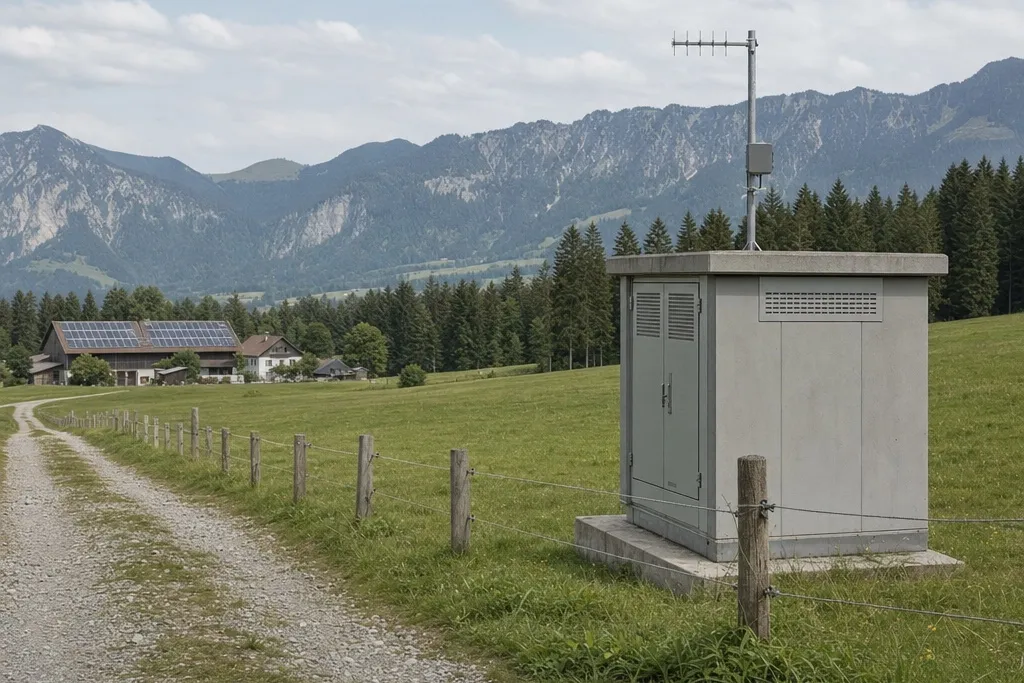
Our radio technology is no longer used only at races. On a farm, it transmits measured values for energy management.

Transformer station by a field track with an antenna mast, behind it a farm with a solar roof in front of the mountains
Agriculture & energy

Measured values from the grid connection point sent by radio to the energy management system

A farm controls its electricity with an energy management system. To do so, the system needs the measured values from the connection point to the power grid. This point lies outside the farm premises, and running a cable there is out of the question. Without these values, the system cannot reliably calculate how much electricity flows into the grid and how much the farm draws from it.

Our approach

We connect our radio module to the existing meters at the connection point. It reads the values via their interface and sends them by LoRa to the farm. There they feed into the energy management system. A directional antenna focuses the transmission power on this one link. The module is the same as in our other applications, only the interface to the meter is adapted.

Implementation

In agreement with the parties involved, we are implementing the radio link directly for productive operation and integrating it into the existing energy management system.
StatusOctober 2026
Discuss a similar project
Case studies

What our technology makes possible

Three scenarios that show how we would solve typical challenges. Each one builds on components that have already proven themselves in our timing system.

Note on the case studies. The scenarios describe possible solutions. They are not series products. Specific performance figures depend on the terrain, the sensors and the requirements. We define them together in each project and test them in the field.
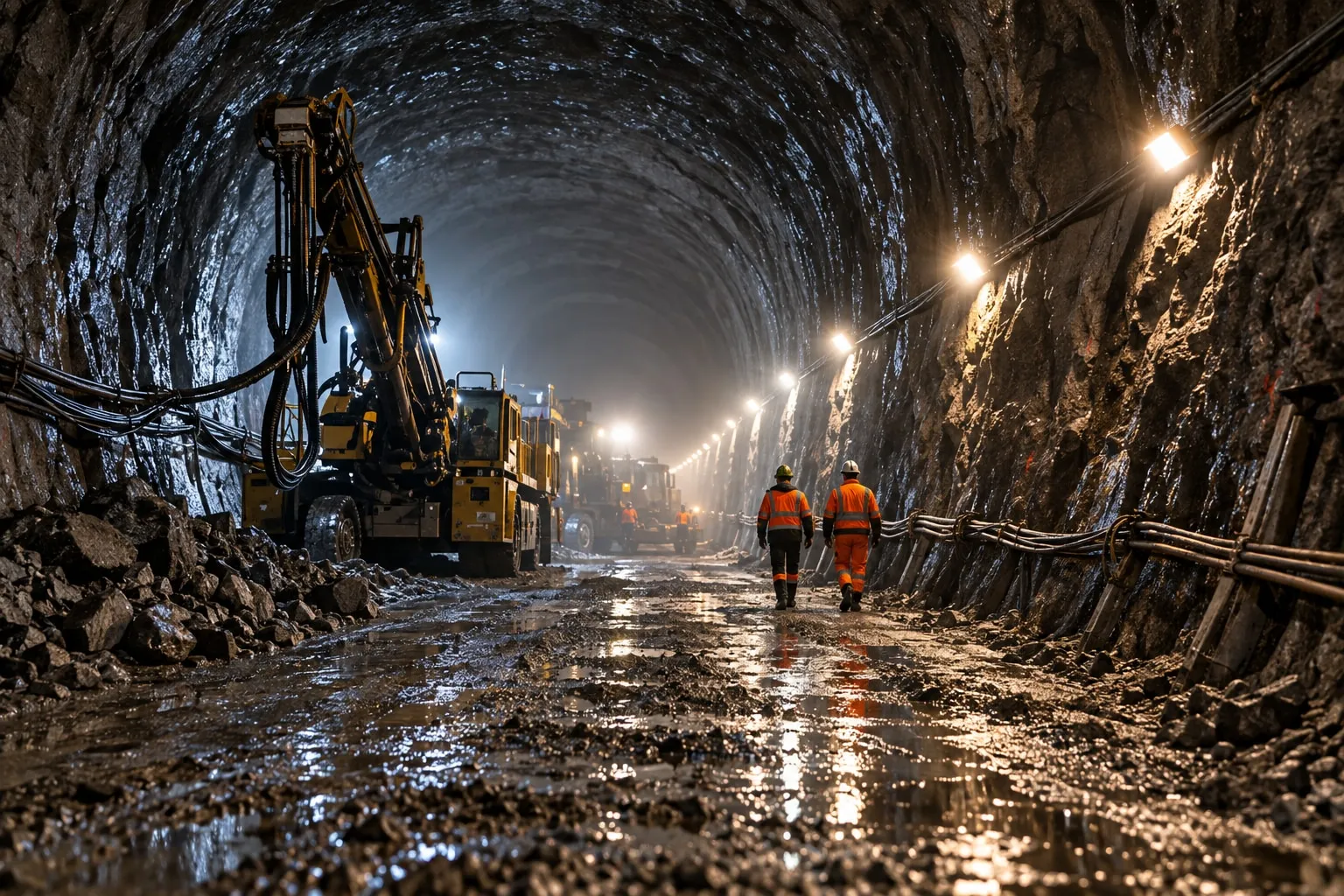
Tunnel construction site with a drilling rig and two workers in the light of the site lighting
ConstructionScenario

More safety in tunnel excavation with personnel tracking and gas monitoring

A construction company is driving a tunnel several kilometres long. Inside the mountain there is no mobile network, the tunnel face moves forward every day, and cables get damaged or have to be extended constantly. At the same time, site management must know at all times how many people are in the tunnel and whether gas levels are becoming critical.

Challenge

  • No mobile network and no Wi-Fi inside the mountain
  • The construction site changes every day
  • Alarms must reach the control room within seconds
  • Complete documentation for occupational safety & authorities

Our approach

  • Robust, battery-powered radio nodes along the tunnel tube that simply ‘move along’ with the excavation
  • Check-in and check-out by NFC chip at the tunnel portal show who is in the tunnel
  • Gas sensors at the tunnel face report limit values immediately and send measured values at fixed intervals
  • Live dashboard for site management with people in the tunnel, gas levels and alarm history, connected to the control room or construction site software

Possible benefits

  • Real-time overview of personnel, also in the event of an evacuation
  • No laying and extending of data cables
  • Synchronous timestamps make events fully traceable
  • AI analysis detects unusual gas trends before limit values are reached
  • Local buffering so that no data is lost
Taken from timingNFC login, set-up in minutes
 Self-synchronisation, resync after interruption
Discuss a similar project
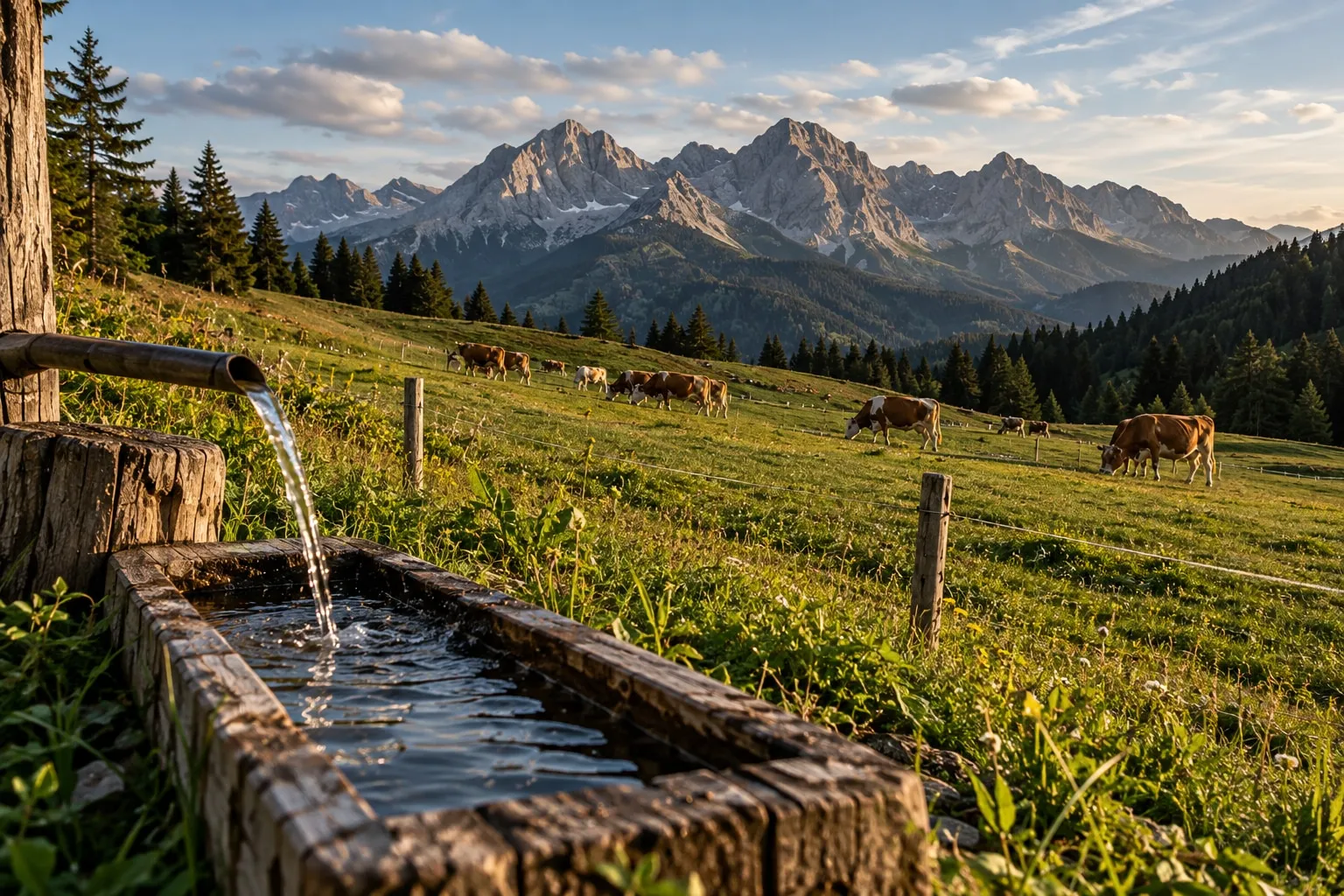
Alpine pasture with a wooden water trough, electric fence and grazing cows in front of the mountains
AgricultureScenario

Remote monitoring of water troughs, electric fences and soil on alpine pastures

A farm manages several alpine pastures and remote plots. Mobile reception is patchy and the distances are long. Until now, whether the water trough still has water or the electric fence has voltage can only be found out on site, and often too late.

Challenge

  • Long distances, ridges, forest and hardly any mobile network
  • No power supply at the measuring points
  • Daily inspection trips cost time and diesel
  • Faults are often noticed late

Our approach

  • Energy-efficient sensor nodes for water level, fence voltage and soil moisture, with battery or solar module
  • Radio planning along the topography, with intermediate nodes and a directional antenna if required
  • Central station at the farm, with a notification to the smartphone as soon as internet is available
  • Event-driven reporting when limit values are reached, otherwise economical cyclic transmission
  • App with a map view of all plots, historical data and push notifications

Possible benefits

  • Recognise the need for action before animals come to harm
  • Significantly fewer inspection trips
  • No ongoing SIM or network fees per sensor
  • Data basis for irrigation and grazing planning, with AI-supported forecasts on request
Taken from timingRange over ridges & forest
 Cold-resistant battery technology, directional antenna ‘plus’
Discuss a similar project
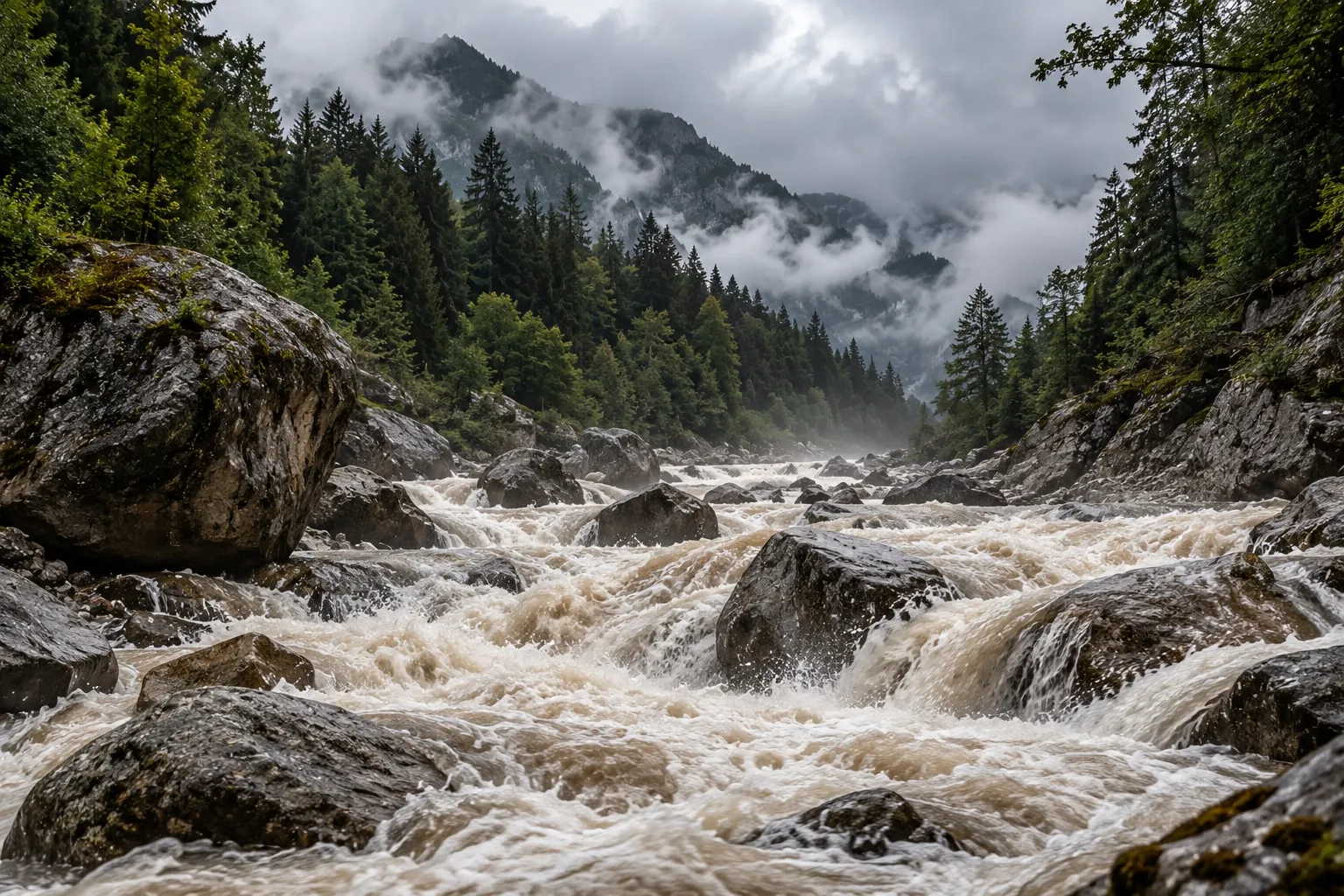
Mountain stream in flood between boulders and wooded slopes
Municipalities & smart cityScenario

Early warning on mountain streams with water level data that arrives even in severe weather

A municipality in the Alpine foothills wants to monitor water levels and rainfall at several mountain streams in its catchment area. During heavy rain and power cuts in particular, however, the mobile network often fails. Those are exactly the moments when the fire brigade and the municipal works depot would need the data most urgently.

Challenge

  • In an emergency, the mobile network is the first thing to fail
  • Measuring points are widely scattered in valleys and gullies
  • Warnings only count if they arrive immediately
  • Budgets do not allow for expensive infrastructure

Our approach

  • Independent radio network from the measuring point to the works depot or fire station, independent of providers
  • Water level and rainfall sensors with backup battery, the measuring interval shortens automatically as the water level rises
  • An AI model based on the measurement history estimates the further course of the water level
  • Redundant radio paths and fallback strategies for critical points
  • Display on a robust LED board on site and an interface to existing alerting or control systems
  • Situation dashboard with water level history, warning levels and export for reports (view example)

Possible benefits

  • Real-time situation overview, even in severe weather and power cuts
  • Valuable minutes of lead time for emergency services
  • Low operating costs, no network fees
  • Expandable with environmental, traffic or building sensors
Taken from timingLED display board, listener module
 Real-time transmission, fail-safety
Discuss a similar project

If your application is not among them, tell us about it. We will be glad to check what is possible.

Technology

Our patented protocol based on LoRa

LoRa (Long Range) is a radio modulation for long ranges with low energy consumption. The widely used LoRaWAN standard is made for large numbers of low-power sensors. It is less suitable for real-time operation, precise synchronisation or operation without any infrastructure at all. We developed our patented protocol for these requirements.

Reference architecture of an Alpenhunde radio network Sensors and end devices transmit by LoRa to optional intermediate nodes and a central unit. The central unit provides the data to your system via Wi-Fi, LAN or USB. Sensor Actuator Button / NFC Display END DEVICES Intermediate node optional, for range Central unit (master) Synchronisation & buffer Your system Control room / SCADADatabase & cloudApp & dashboardAlertingSpecialist software Wi-Fi · LANUSB · API LoRa · patented Alpenhunde protocol
Radio link (LoRa, Alpenhunde protocol)Local interface to your system

Maximum fail-safety

Every node buffers locally and can resynchronise selectively. As a result, no data is lost during interruptions.

Independent of mobile networks

The network belongs to you and needs neither a provider nor SIM cards. Internet access is not strictly necessary either.

Real-time data

Events are transmitted immediately and carry synchronous timestamps across all nodes.

Scalable & flexible

From a few measuring points to a distributed network. Nodes and functions can be added.

High energy efficiency

Battery operation over long periods, matched to the transmission interval and the application.

For real-world conditions

Developed for cold, wet, forests, ridges and long distances in actual use.

The radio system in figures

At its heart are the Semtech LR1121 radio chip and the ESP32-S3 microcontroller. We supply the electronics with firmware for installation or as a finished device in an aluminium housing.

PDF, 3 pages, 350 KB

20 kmRange in open terrain
4 kmRange in built-up areas
−144 dBmSensitivity
+22 dBmTransmission power
3.3–12 VPower supply
IP64Protection rating of the housing

Which radio technology suits which case

Mobile network / NB-IoTLoRaWAN (standard)Alpenhunde radio network
InfrastructureDepends on the provider’s network coverageGateways and network server required● Independent network, also fully offline
Real time● Good, provided the network is available● Limited, especially towards the end device● Events are transmitted immediately
Time synchronisation● Network-dependent● Coarse, usually not sufficient for precise measurement● Precise, permanently calibrated (proven in timing)
Behaviour during faults● No transmission during a network outage● Depends on gateway coverage● Local buffering, resync, fallback strategies
Running costs● SIM or data fees per device● Depending on the network operator● No network fees
AdaptabilityStandardisedStandardised● Down to firmware and protocol level

Simplified comparison. Each technology has its strengths, and we will tell you openly if a standard is the better choice for your case.

Software & data

Software that makes your radio data usable

We develop the interfaces to your adjacent systems, process the data and make it visible in dashboards and apps, together with our software partner pripares.

Interfaces

ERP, control room, GIS, specialist software, cloud

Data processing

Check, aggregate and store data, and detect anomalies with AI

Dashboards

Live situation overview, histories, reports

Apps

Web and mobile, also offline

Hardware & prototypes

Devices we develop and build ourselves

If there is no suitable device for your application, we develop it. Depending on the project, this ranges from the electronics to the circuit board, and we also design the housing and mechanics. We manufacture our timing system Alpenhunde Timing ourselves in small series in Bichl, Made in Germany.

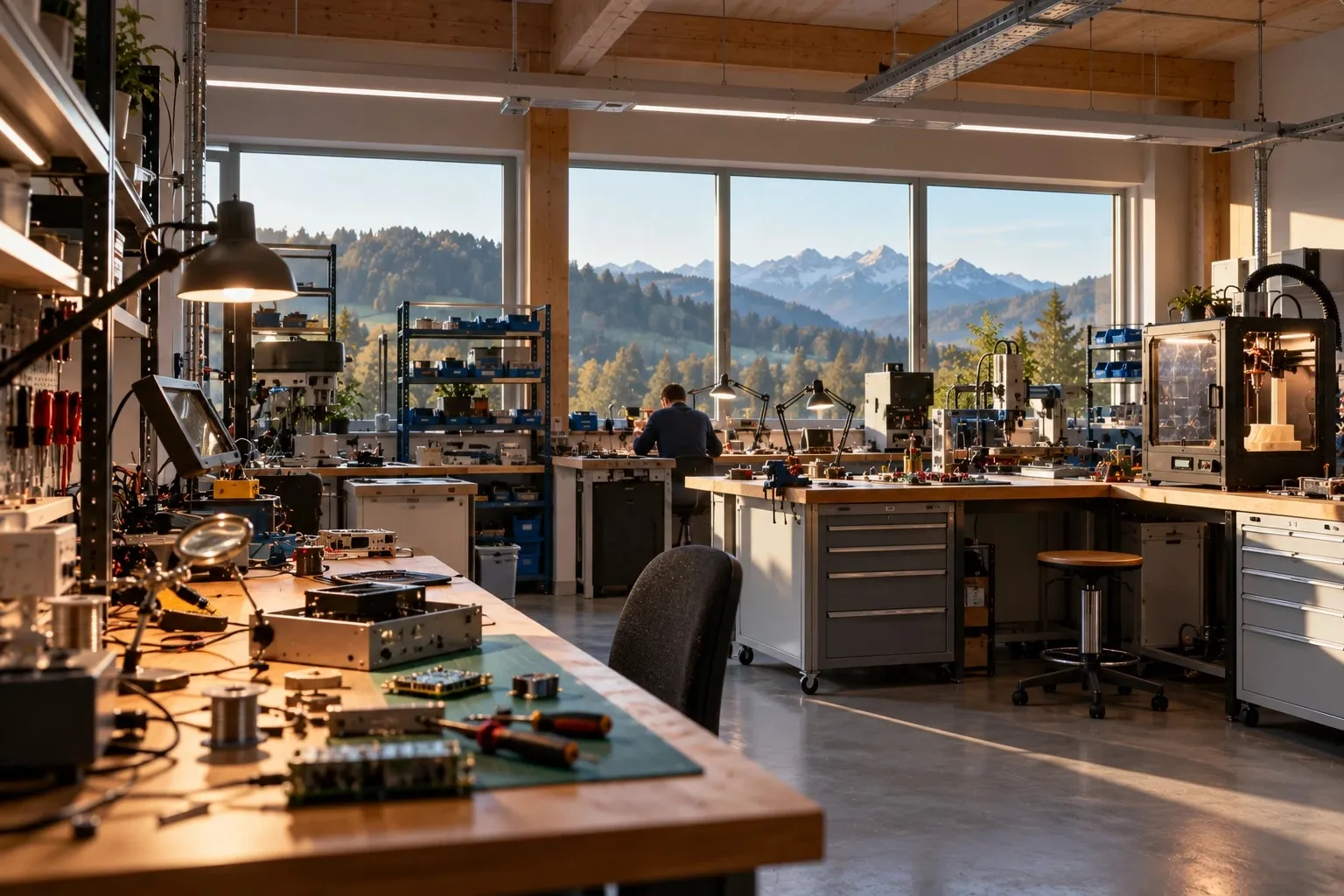
Electronics workshop with circuit boards, soldering station and 3D printer in front of a window with a mountain view

Electronics

Circuits and circuit boards for radio and sensors, tailored to your application.

Housing & mechanics

Housings and mounts that suit the site and hold up there in all weathers.

Prototypes

We make the first samples in Bichl, often by 3D printing, with partners if required. This quickly gives you a device that can be tested in the field.

Testing & approval

Depending on the application, we test in cold and damp conditions, measure the radio links in the field and support approvals such as CE.

Process

From the idea to a working network

We support your project through all phases and start small. Before you invest, we check together whether and how your project will work.

Initial consultation

We discuss your goal, your workflows and the area of use. The consultation is non-binding.

Feasibility

We assess range, topography and sources of interference and take measurements on site if required.

Pilot

A small set-up in real terrain provides reliable measured values.

Implementation

We develop hardware, firmware, software and interfaces, test everything and hand over a documented system.

Operation

We provide support during operation, expand the system and develop it further over the long term.

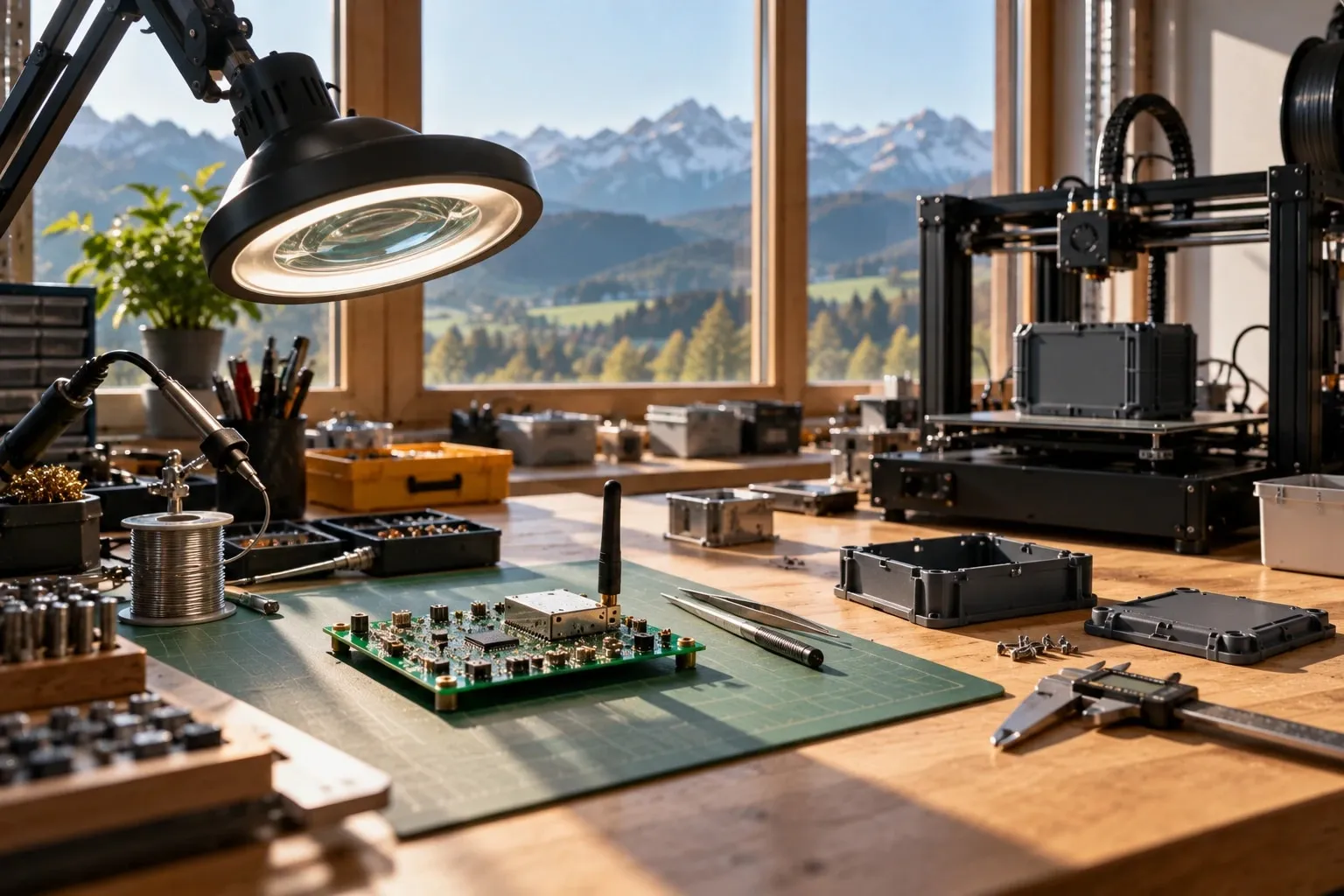
Workbench with a circuit board, soldering station and a 3D printer printing a housing
Services

Our services in detail

We deliver radio networks as a complete service, from the initial analysis to ongoing operation.

Consulting & concept

Sound analysis and strategic planning for your project.

More
  • Analysis of the technical requirements and operating conditions
  • Assessment of ranges, topography and sources of interference
  • Selection of the right network architecture and end devices
  • Requirements for timing behaviour, data consistency and operational reliability

Network & system planning

Tailored planning for maximum performance.

More
  • Planning of radio cells and node structure
  • Interfaces to existing networks and systems
  • Redundancies and fallback strategies
  • Documentation of system architecture and communication flows

Hardware & configuration

Our own devices and prototypes, preconfigured and ready for use.

More
  • Delivery of preconfigured and tested devices
  • Individual device configuration for each application
  • Parameter settings for radio, timing behaviour and storage strategy
  • Device and network management via unique identities

Firmware & protocol

Custom software for your requirements.

More
  • Adaptation of the firmware to project-specific workflows
  • Integration of customer-specific data formats and interfaces
  • Event-driven or cyclic transmission
  • Local buffering with subsequent transmission

Commissioning & integration

Professional implementation, seamless integration.

More
  • Support with initial commissioning on site or remotely
  • System tests under real operating conditions
  • Integration into IT, control or analysis systems
  • Handover of a documented system ready for operation

Operation & support

Long-term support and continuous optimisation.

More
  • Technical support during ongoing operation
  • Support with expansions and adaptations
  • Analysis of special cases and edge situations
  • Further development on a project basis
FAQ

Frequently asked questions about custom projects

Are there ready-made products for construction, agriculture or municipalities?

No. Outside sports timing, we deliberately develop specifically for each project. The case studies show what is possible with our proven technology. We work out together with you what the solution will look like in your case.

How large does a project have to be?

There is no minimum size. Many projects start with a handful of measuring points and a pilot set-up. What matters is that a reliable, independent radio connection offers you real added value.

What is the range of the radio network?

In open terrain, a radio link reaches up to 20 km, in built-up areas up to 4 km. How far it reaches in an individual case depends heavily on topography, vegetation, antennas and mounting height. LoRa is designed for long distances, and intermediate nodes and directional antennas can bridge difficult links too. We determine reliable values in the feasibility phase, ideally with measurements on site.

Can existing sensors or systems be connected?

In many cases, yes. We adapt firmware, data formats and interfaces, for example for control rooms, databases, specialist software or cloud services. We clarify which sensors are suitable in the concept phase. An overview of the possible interfaces is given in the data sheet (in German), including RS-485, Modbus, CAN and analogue inputs with 4–20 mA.

Who owns the data?

You do. The network operates independently and does not require a third-party platform. You decide where the data goes.

What does a custom solution cost?

That depends on the scope. After the initial consultation, you receive a transparent estimate for feasibility and pilot. This way you know early on what to expect before larger investments are due.

Let’s talk about your project.

Briefly describe your idea to us. We will get back to you with an initial assessment of what is possible.

Alpenhunde

Specialists in long-range radio networks and the software that goes with them. We supply technology for professional race timing and tailor-made LoRa solutions for your application.

Get in touch